
Communication Coach: What Do They Do and What Results Can You Expect?

- Published on the
- PC: Marie-Elise Studio Photo - Leonilda Renaldo
Table of Contents
What Do They Do and What Results Can You Expect?
Paralyzing stage fright when speaking up in a meeting. The frustrating sense that your messages aren’t getting through to your team. A job interview missed for lack of impact. These professional communication challenges regularly affect executives, managers and employees in career transition. Conveying a vision and building smooth working relationships is not an innate gift: it is a skill that can be developed, contrary to what 75% of my clients believed when surveyed at the start of their coaching. In this article, discover the precise role of a communication coach, how they work in sessions, and the research-backed results of coaching, so you can tackle your speaking and interpersonal challenges.
What is a communication coach?
A communication coach is a certified professional who supports clients in achieving specific goals related to expression and posture, while fostering their behavioral autonomy (Skoumpopoulou, 2017).
To better understand their positioning, it helps to distinguish them from three related professions:
- The trainer: delivers theoretical knowledge and standardized technical tools through a top-down teaching program.
- The consultant: an external expert who analyzes an organizational situation and recommends turnkey solutions, telling you “what to do.”
- The therapist: a mental health professional who treats psychological suffering or trauma by exploring the past. A coach, by contrast, helps clients focus on the “how,” with the goal of moving from the present toward the future. Coaching is therefore generally described as an action- and goal-oriented process, whereas therapy tends to explore the past and personal difficulties.
Their concrete role in sessions
Communication coaching acts as a catalyst for transformation. In sessions, the practitioner follows a structured four-step methodology:
- Personalized assessment: a review of the current situation using 360° evaluations or behavioral frameworks such as the Process Communication Model® (PCM), EQ-i 2.0 or Nonviolent Communication (NVC).
- Practice and simulations: role-plays based on real cases to fine-tune verbal communication, paraverbal cues and posture.
- Constructive feedback: reflective analysis to identify relational blind spots and work on stress management.
- Action plan: defining micro-experiments to test in the field between sessions.
Who is it for, and in which situations?
Hiring a communication coach is particularly relevant in the following situations:
- Public speaking and TEDx preparation: structuring your speech, taming stage fright and captivating a demanding audience.
- Leadership and managerial presence: asserting your natural authority without aggression when stepping into a new role.
- Cross-cultural communication and conflict management: defusing tension and encouraging dialogue within multicultural teams.
- Job interviews and strategic negotiation: showcasing your background and convincing others during career transitions.
What concrete results can you expect?
To assess the effectiveness of coaching, it is important to distinguish independent scientific evidence from self-reported data.
Scientifically demonstrated results (meta-analyses)
- Goal attainment: the landmark meta-analysis by Theeboom, Beersma and van Vianen (2014) shows a large positive effect (g = 0.74) on the achievement of individual goals.
- Performance and skills: the same study finds a significant impact (g = 0.60) on skills and performance, and the meta-analysis by Wang et al. (2022) confirms the effectiveness of integrative approaches (g = 0.71).
- Stress management and attitudes: measurable effects are observed on coping with stress (g = 0.43) and on positive work attitudes (g = 0.54) (Theeboom et al., 2014).
Self-reported data from the profession
According to the ICF Global Coaching Client Study (ICF, 2009), conducted with 2,165 clients in 64 countries, coached clients report improvements in several areas: 80% for self-confidence, 72% for communication skills, 70% for work performance and 51% for team effectiveness. These results are based on participants’ own reports and should be read as such: the sample was recruited through coaches.
How does a coaching engagement work?
A coaching engagement follows a clear contractual framework, defined at the very first meeting: objectives, format and duration are agreed together before sessions begin. For a targeted goal, such as public speaking or managerial presence, a program typically lasts 3 to 6 months, for a total of 6 to 12 sessions of 1 to 1.5 hours, spaced one to two weeks apart. This rhythm leaves time to experiment between meetings without losing momentum.
Coaching rests on a principle of shared responsibility: the coach has an obligation of means, ensuring the framework and the tools, while the client is responsible for the outcome through their commitment and active practice between sessions.
How to choose your coach
Word of mouth is often the first instinct when looking for a coach, and it is a good starting point: a recommendation from someone you trust already says a lot about the quality of the support. But before committing, five essential criteria deserve your attention:
- Recognized certification: make sure the practitioner holds a title registered with the RNCP (the French national register of professional certifications) or an accreditation from a leading federation (ICF: ACC, PCC, MCC levels; EMCC; SFCoach).
- Real-world experience and a track record of coaching engagements: a communication coach practices public speaking themselves (conferences, stages, presentations to varied audiences) and can illustrate their work with concrete engagements: preparing a speech, managing stage fright, structuring a message, working on voice and posture. This is the principle I apply in my own practice: I am a multiple award winner in public speaking competitions and a European vice-champion for a speech delivered in French, which is not my first language. This experience allows me to understand from the inside what an oral challenge means, and to pass on what truly works on stage.
- Mastery of behavioral models: favor established methods such as PCM, EQ-i 2.0 or NVC.
- Ethical framework: check that the coach respects professional confidentiality, adheres to a code of ethics and practices under peer supervision.
- Initial meeting (or “compatibility interview”): a free first session lets you assess the rapport and the level of trust. Don’t overlook this step: it often tells you more than a résumé about how you will work together.
Conclusion
Personalized support in oral and interpersonal communication is a strategic lever for making your speaking engagements a success and asserting your leadership. Based in Lancy, Switzerland, the LeoDynamics Center serves your communication needs for a transformative experience. Contact us today to book your free discovery session and give new momentum to your professional path.
Sources :
- Theeboom, T., Beersma, B., & van Vianen, A. E. M. (2015): https://research.vu.nl/en/publications/the-differential-effects-of-solution-focused-and-problem-focused–2/
- Wang, Q., Lai, Y.-L., Xu, X., & McDowall, A. (2022): https://www.researchgate.net/publication/352518680_The_effectiveness_of_workplace_coaching_a_meta-analysis_of_contemporary_psychologically_informed_coaching_approaches#pf17
- International Coaching Federation (2009): https://irp.cdn-website.com/be7b25b2/files/uploaded/ICF-Global-Coaching-Client-Study-complete.pdf
Professional Coach in English, Leadership and Emotional Intelligence
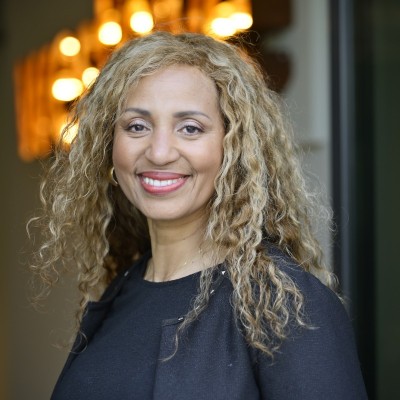
Leonilda Renaldo is a professional coach and the founder of LeoDynamics, specializing in business English, executive presence, public speaking and emotional intelligence. Based in Geneva, she supports executives, managers and international teams in developing their confidence, clarity and impact in multilingual professional environments.
Her expertise has been featured in Marie Claire, Yahoo Finance and BSmart, and she has shared her perspective on emotional intelligence as a TEDx speaker.